
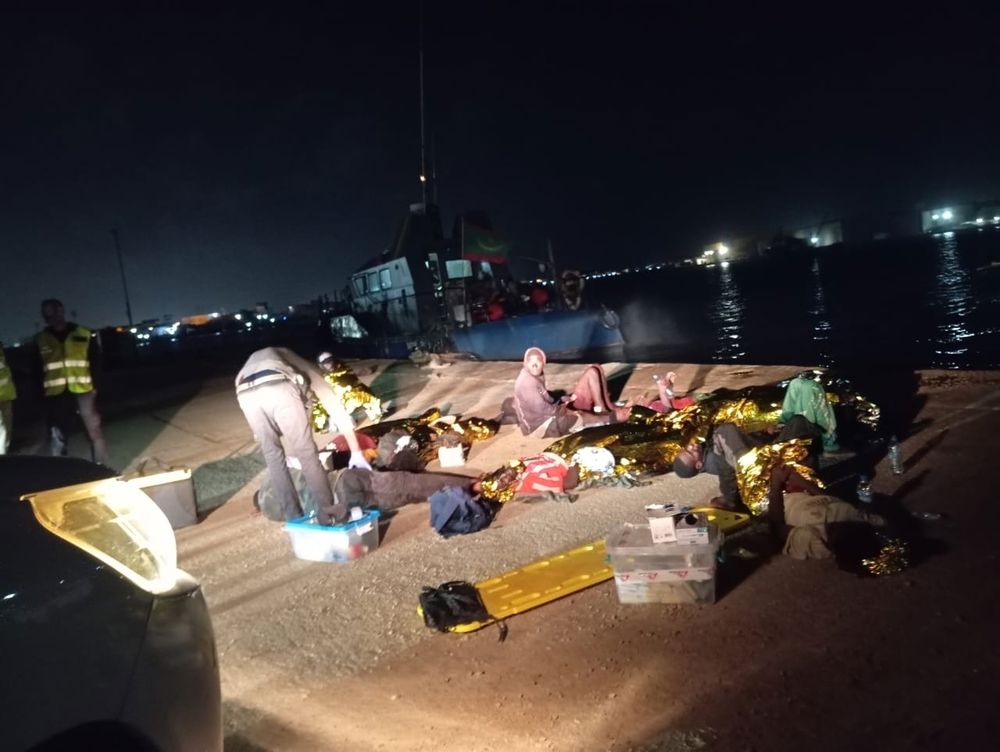
According to initial testimonies collected from survivors, around 190 people were on board the boat. After 25 days at sea, only 38 people survived. The survivors were first assisted by fishermen, then by the Mauritanian coastguards, before being brought to the Mauritanian Red Crescent, which requested MSF’s support.
This is one of the deadliest disembarkations witnessed by MSF teams in Mauritania since the beginning of 2026. This event is a stark reminder of the extreme dangers faced by people attempting to take the Atlantic route, where crossings are often long, perilous, and marked by risks of shipwreck, dehydration, violence, severe psychological trauma and, above all, loss of life.
In recent weeks, MSF teams in Nouadhibou supported three disembarkation interventions, on 14 and 18 July, assisting a total of 387 people. MSF teams carried out 66 medical consultations and referred nine people to specialised health facilities in Nouadhibou. On 18 July alone, MSF responded to two successive disembarkations between midnight and 7 p.m., one of which followed the deadly incident involving the boat that had departed from The Gambia. People who reached the shore were suffering from post-traumatic shock and psychosis, bone fractures, traumatic injuries, and hypothermia.
Survivors described terrifying conditions at sea, as well as the loss of relatives and other passengers during the crossing. MSF teams observed acute psychological distress among survivors. The severity of the testimonies and the scale of the loss of life also had a significant psychological impact on the teams involved in the response.
What our teams saw in Nouadhibou is deeply shocking. People arrived after weeks spent at sea, exhausted, traumatised and grieving the loss of relatives and other passengers who did not survive the crossing. One of the 38 survivors cared for by MSF said she had seen her sister die before her eyes. No one should have to endure such suffering while seeking safety or dignity.
Fouzia Bara, MSF migration programme manager
The Atlantic migration route has become one of the deadliest in the world. According to the Spanish NGO Caminando Fronteras, almost 10,000 people were reported dead or missing while attempting the Atlantic crossing in 2024, and more than 3,000 in 2025. It is very likely that the actual number of people who have died is higher than the reported figures, as not all sea crossings are reported or lead to rescues. Although arrivals to the Canary Islands have decreased this year, the risks remain extreme. According to UNHCR, arrivals to the Spanish archipelago have decreased by 61 per cent compared with 2025, with 4,400 arrivals recorded as of 15 July. Yet recent incidents underline the persistent dangers faced by refugees and migrants attempting to reach Europe, many of whom depart from points located more than 2,000 kilometres from their intended destination.
MSF launched its “Atlantic Migration” project in Mauritania following the increase in tragedies at sea. In Nouadhibou, MSF began providing direct assistance during disembarkations and interceptions in December 2024, before strengthening its response with the opening of the Centre for Reception, Care and Assistance — CASA in April 2025. The centre supports the most vulnerable people, whether they are migrants, in transit, or of Mauritanian origin.
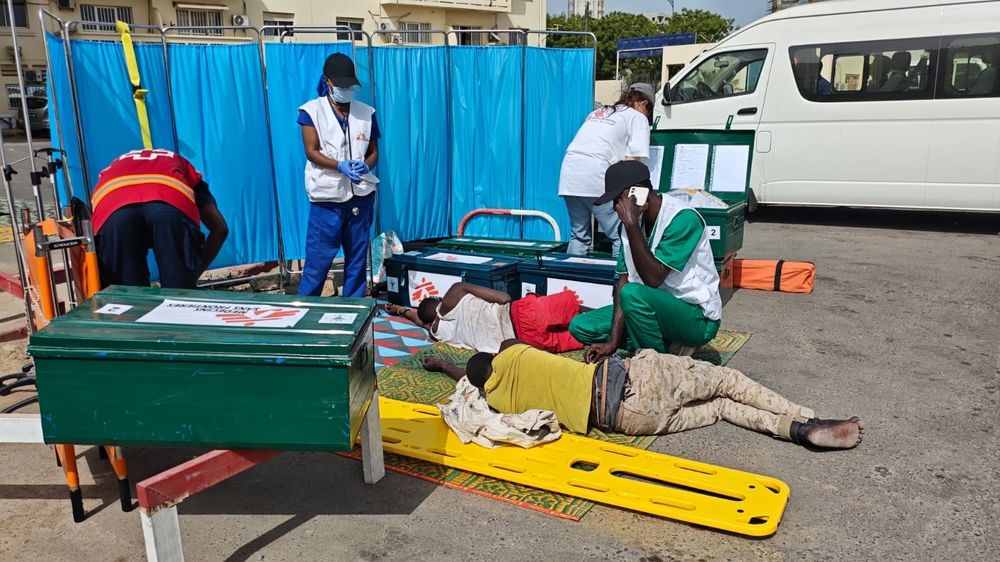
MSF calls for urgent measures to prevent further deaths on the Atlantic route. Search and rescue mechanisms must be strengthened, adequately resourced, and able to respond effectively to the needs of people in distress at sea. At the same time, safe and legal pathways are needed to reduce the risks people are forced to take when seeking protection, safety or a better future.
The deaths of these men, women and children must not be met with silence. MSF calls on governments and relevant authorities to place the preservation of human life at the centre of their migration policies, to strengthen search and rescue capacities, and to ensure that no person in distress at sea is left without assistance
Fouzia Bara
MSF urges governments of countries along the migration route, European states, and regional and international actors to work collectively to prevent further loss of life. Saving lives at sea and ensuring humane and dignified assistance to survivors must be an immediate priority.