
eCard delivery in progress. Please do not leave or refresh the page

loading...
無國界醫生 Médecins Sans Frontières
Field News

Forgotten between borders — The critical needs of displaced people in South Sudan

28 Feb 20266 Read Time
MSB256009 Medium

Barely a decade after gaining independence, South Sudan, the world’s youngest nation continues to face overlapping crisis such as open conflict, violence, insecurity and limited access to healthcare. For nearly three years now, the war in neighboring Sudan has unleashed yet another emergency, forcing hundreds of thousands of people to flee across the border to a country unprepared to absorb such an influx. To document this crisis, we collaborated with Nicolò Filippo Rosso, an internationally renowned photographer recognised for his powerful and evocative documentary work. He travelled to meet those living close to the border between Sudan and South Sudan, a context largely overlooked by media attention.
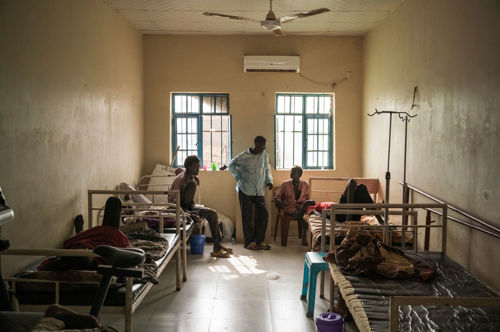
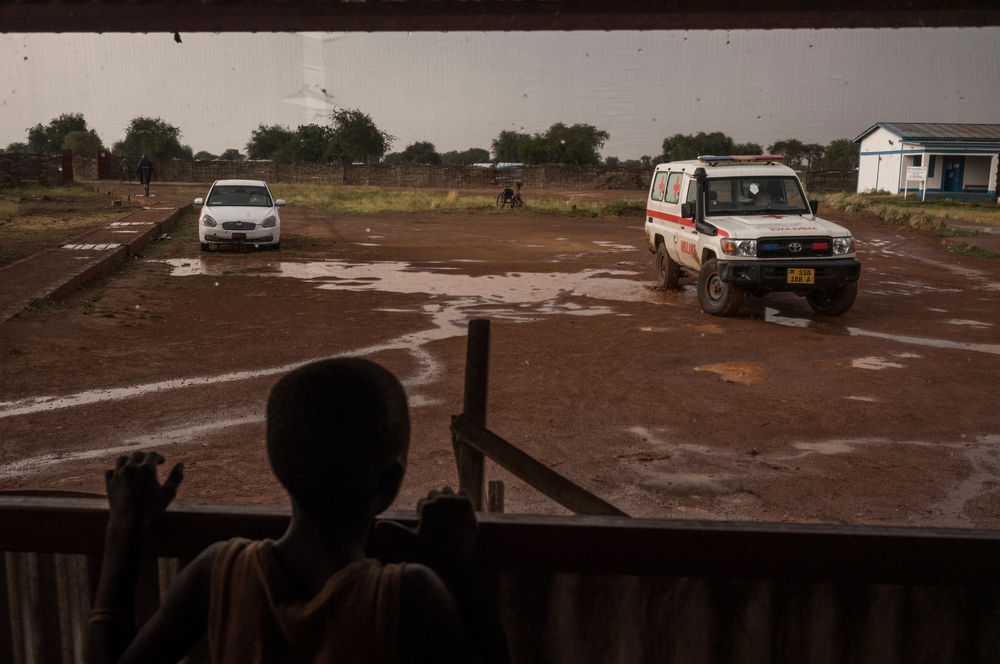
With the surge of displaced people crossing the border and limited health services elsewhere, Abyei’s hospital has become the only reliable point of care, often stretching beyond its intended capacity. © Nicolò Filippo Rosso
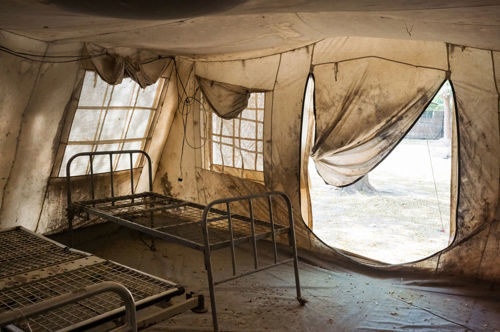
Turalei, Twic County— Inside the compound of Mother Teresa Hospital, an empty canvas tent stands beside rusted bedframes, repurposed as an overflow ward whenever patient numbers surge. Supported by Médecins Sans Frontières (MSF), the facility relies on temporary structures like this to absorb people arriving from remote villages and displacement sites across Twic County. © Nicolò Filippo Rosso
Overwhelmed at the Borderlands

Abyei Special Administrative Area, a territory long disputed between Sudan and South Sudan. For years it has been hosting internally displaced people fleeing violence in other states. As the war in Sudan pushes deeper into Darfur and the Kordofan states, reaching its 1,000th day with no sign of respite, the situation has reached a critical level. Many civilians arrive by foot, not only from Sudan but also from other South Sudanese states affected by years of violence and displacement. These movements place immense pressure on health facilities that were never designed to cope with such a massive and sustained influx of displaced populations.
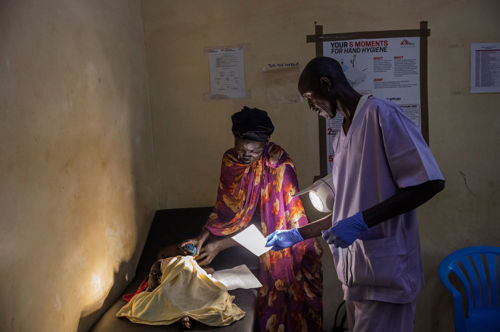
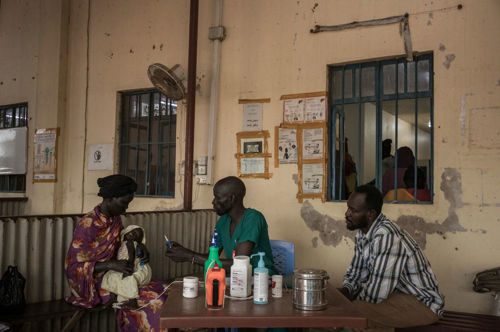
In a consultation room, an MSF nurse examines Thiany Chol under a focused lamp, using the light to locate a viable vein for intravenous hydration. After weeks of displacement and nutritional stress, many children arrive severely dehydrated, febrile, or anemic, requiring urgent stabilisation. © Nicolò Filippo Rosso
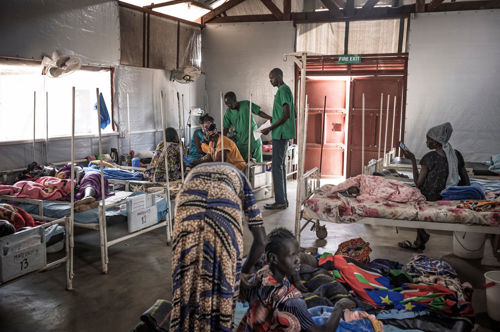
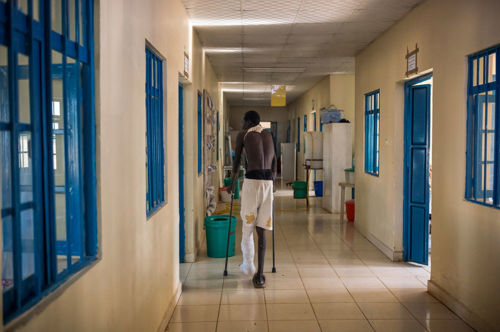
A wounded stands in the orthopaedic ward of Abyei Hospital. MSF teams are providing ongoing wound care, pain management, and monitoring to prevent complications such as infection. © Nicolò Filippo Rosso
Abyei— At the triage area of the MSF hospital, Yan Maper holds her one-year-old daughter, Thiany Chol, as a clinical officer performs an initial assessment for malnutrition and anemia. Many displaced families arriving from Sudan reach Abyei after prolonged journeys with little access to food, clean water, or shelter. © Nicolò Filippo Rosso
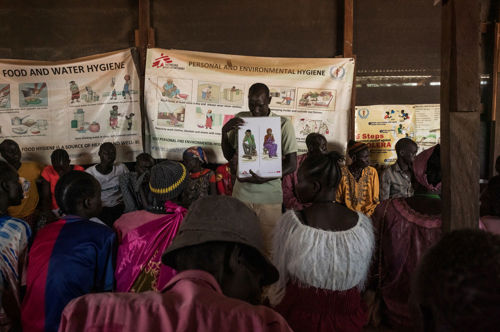
Community members wait for their turn to be attended at the MSF-supported clinic, while an MSF health promoter uses visual materials to explain key messages on hygiene and disease prevention. © Nicolò Filippo Rosso

MSF’s Ameth Bek Hospital, the only functioning hospital care facility in the region, is increasingly overwhelmed by patients. The teams are focusing particularly on emergency services, including surgery, but also inpatient care and midwifery. Between January and September, 2025, MSF provided surgical care to 1,240 patients, including those with violence-related injuries. 
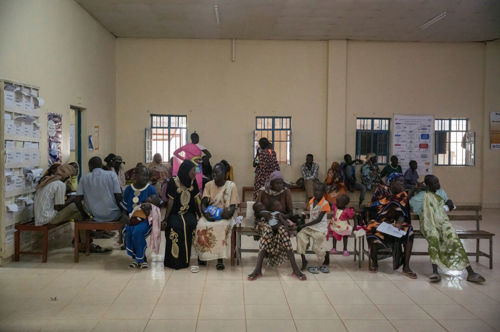
Families crowd into the waiting hall of the MSF-supported Ameth Bek Hospital, one of the few functioning health facilities in a region overwhelmed by displacement and recurrent violence. The room fills from early morning, often staying full until evening. © Nicolò Filippo Rosso
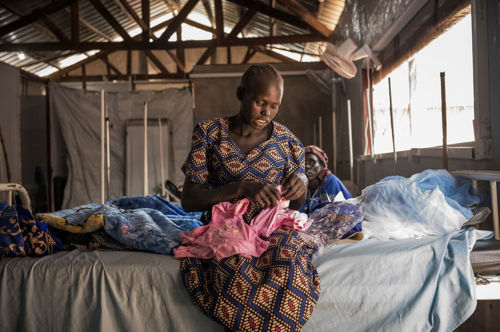
Dhialc Jieth, 30, examines a baby blanket from the maternity kit she received after giving birth in the Mayen Abun hospital. The kits—provided by MSF—contain essentials such as clothing, soap, and blankets, offering new mothers a small measure of comfort in a county where displacement, poverty, and the collapse of basic services leave families with few resources to care for newborns. © Nicolò Filippo Rosso
Meeting the needs of remote communities

In addition to running the hospital, MSF has 9 integrated community case management (ICCM) sites managed by trained local volunteers in collaboration with local health authorities. MSF’s team travels long distances to the village health posts to bring medicine and support the trained community health workers. 
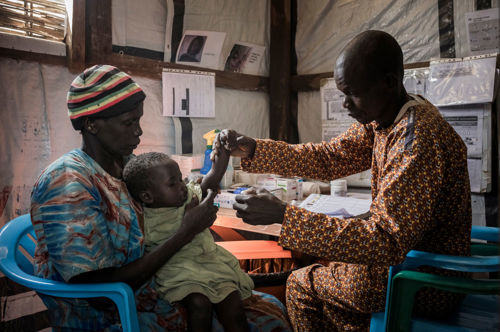
Inside the ICCM consultation hut, a community member trained by MSF as an Integrated Community Case Management (ICCM) provider, prepares to perform a rapid malaria test on three-year-old Achuel Dutm. With malaria remaining one of the leading causes of illness among young children in the area, ICCM workers like Mam play a critical role in early detection and treatment. Their work help ensure that common childhood illnesses are caught and treated before they become life-threatening. © Nicolò Filippo Rosso
A fallen health system amid funding cuts and structural weakness

All these difficulties are exacerbated by a wider crisis. Despite being the world’s youngest country, South Sudan remains heavily dependent on humanitarian aid: more than 80% of essential health services are run with the support of NGOs. 


In July 2024, the Health Sector Transformation Project (HSTP) launched a multi-donor-funded initiative (including the World Bank) to support basic health and nutrition services and emergency preparedness in South Sudan. Led by the government and implemented in collaboration with the WHO, UNICEF, and implementing partners, the model initially planned to support 1,158 health facilities across 10 states and three administrative areas over three years. However, due to funding constraints, it will now support only 816 facilities until 2027, leaving significant gaps in coverage. Now more than ever, it is clear that this model is deeply unsustainable: some organisations are forced to close their doors after massive cuts in international aid and others because of insecurity and violent attacks, causing the entire health system to collapse. For patients receiving care from MSF, this is a painful reality: once they leave the facilities, there are few, if any, other places to turn for help and support.


Across all MSF project locations, teams are witnessing the devastating impact of a chronically under-resourced system. Many primary healthcare facilities are non-functional, essential medicines are frequently unavailable, staff salaries are delayed, and hospitals are neglected. As a result, people in need of lifesaving surgery or emergency maternal care have extremely limited options. 
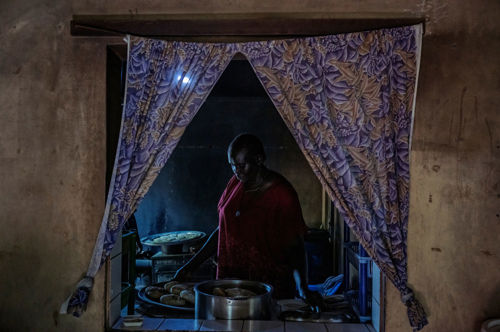
In the dim light of the hospital kitchen, a woman arranges trays of bread prepared for the doctors, nurses, and support staff at Mother Teresa Hospital. The facility, supported by MSF, depends on local health workers who work through chronic shortages, low pay, and overwhelming needs from displaced families arriving across the region. With salaries irregular and often insufficient, the daily meals provided here serve as a practical lifeline, allowing staff to stay focused on patient care despite the difficult conditions in South Sudan’s strained health system. © Nicolò Filippo Rosso
With only a small number of trained health staff available in the Twic County —and many public facilities closed or barely functioning due to lack of salaries, supplies, and trained personnel—the maternity unit of the MSF-supported hospital has become one of the few places where women can safely give birth. © Nicolò Filippo Rosso

These pressures are unfolding alongside overlapping crises, including violence, mass displacement, flooding, and disease outbreaks, all of which further strain an already fragile system. In 2025 alone, MSF opened 12 emergency projects in response to cholera outbreaks, malaria peaks, flooding, and displacement linked to violence, more than double the number of emergency responses launched in 2024. 
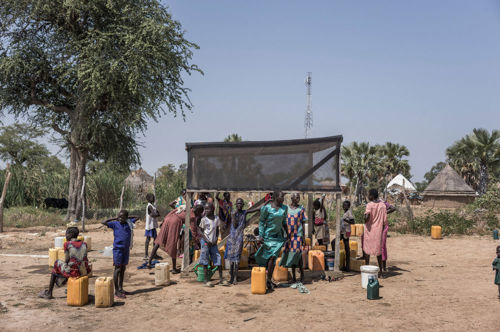
Children wait with jerrycans at an MSF-supported water point, one of several established after a massive influx of internally displaced people overwhelmed the local water system. The arrival of tens of thousands of IDPs—combined with chronic gaps in state services—has left communities dependent on humanitarian actors for the most basic needs. © Nicolò Filippo Rosso

MSF continues to call for the crisis in South Sudan to be prioritised in the international agenda, with a coordinated response to support populations facing multiple overlapping crises across the country.
Field News

Addressing frequently asked questions and allegations about MSF’s work in Gaza

02 Mar 20262 Read Time

Latest News & Stories