
eCard delivery in progress. Please do not leave or refresh the page

loading...
無國界醫生 Médecins Sans Frontières
Field News

What’s Left After the Flames: Four Years of Full-Scale War in Ukraine

04 Mar 20265 Read Time
MSF358263 Medium

Four years after Russia launched its full-scale invasion of Ukraine, the more than 1,000 kilometre front line continues to shift. Along this vast stretch, many towns and villages have been damaged by ongoing shelling, drone strikes, and daily hostilities, forcing people to leave their homes. Families have had to give up their homes, their communities, and even the land where their loved ones are buried, setting out on an uncertain journey and a way of life that may never return to what it once was. Since February 2022, approximately 2,500 health facilities have been damaged or destroyed; around four million people have been displaced within Ukraine; and more than five million have taken refuge outside the country.


MSF used to provide medical care in several of the affected areas, including Bakhmut, Kostiantynivka, and parts of Kharkiv and Zaporizhia oblasts. As our teams were forced to relocate, around four million people across Ukraine were also displaced. What we have witnessed is that those who leave the latest are often the most vulnerable: older people, individuals with chronic illnesses, or those without the means to leave. Many remain until hospitals, pharmacies, schools and other essential services have completely shut down before they are left with no choice but to flee. What remains under the shadow of war? Who is still here? How have years of conflict reshaped daily life across Ukraine?
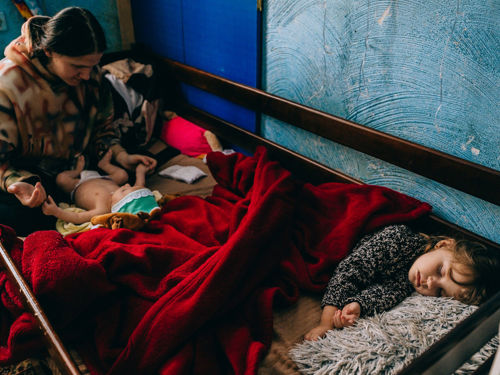
 

Two-month-old Damir has been bathed only twice since birth. With frequent blackouts, the room never gets warm, and temperatures have dropped to –20°C. Repeated strikes on energy infrastructure have left heating, water and electricity unreliable. Afraid he might fall sick in the cold, his mother can only clean him with wipes. © Julia Kochetova/MSF
Needs are growing as the conflict grinds on

MSF’s increased presence in shelters through mobile medical clinics reflects the growing needs of displaced people, as fighting continues to empty towns and villages. Consultations provided by mobile clinics more than doubled in 2025 compared to 2024—rising from 4,327 to 9,500.
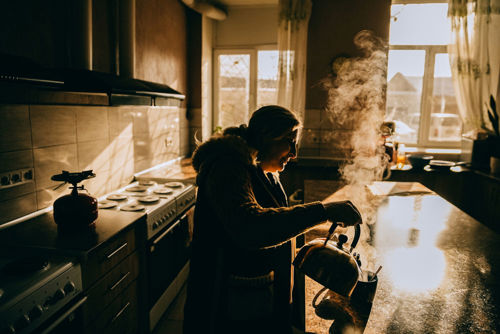
 

Morning light fills the kitchen of a shelter for displaced people in Dnipro. With the centre without electricity, sunlight is the only light residents have. © Julia Kochetova/MSF
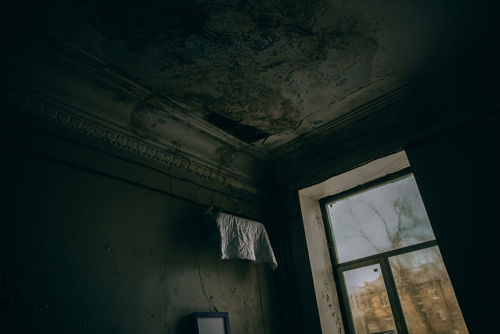
The ceiling of the shelter’s assembly hall has begun to collapse. The repairs would require significant funding, so the room is currently closed off. Residents once gathered here to celebrate holidays. ©Julia Kochetova
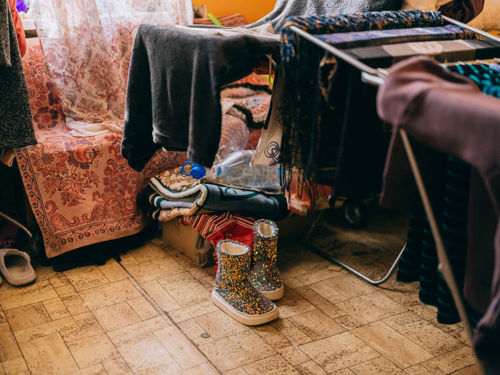
The corridors of the shelter are lined with shoes, children’s toys, and clothes hung out to dry. They have also become a daily meeting point for neighbours. For many elderly residents, this shared space and sense of community have grown so familiar that leaving it behind will be difficult when the time comes. © Julia Kochetova
Lyman was also 67-year-old Zinaida Babisheva’s home, who now lives in the Dnipro displacement shelter. “I still dream of my home… apples, cherries, roses, lilies. We had everything. Now my daughter grows flowers in pots, but I no longer want to plant anything.” ©Julia Kochetova
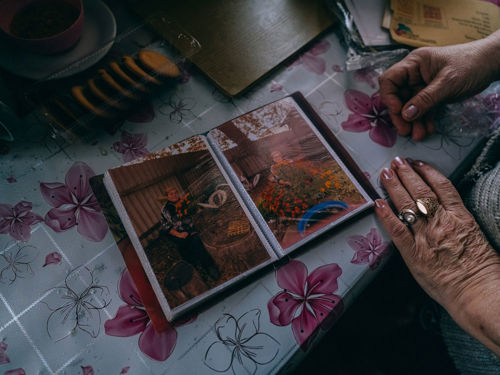
Zinaida's neighbour, with whom she kept in touch, said that during the occupation, Russian soldiers who entered Lyman robbed her house. He saw them carrying things out of it. But Zinaida managed to save several photo albums which she took with her. ©Julia Kochetova
Liubov Kuzmenko, 65, from Siverskodonetsk says her apartment was looted after Russian forces took control. But what weighs most heavily on her is separation from her family. “My father passed away in 2024, and I could not even bury him. Now, only my sister can visit our mother, while I can only record videos to send my greetings. It pains me deeply that I cannot be by my mother’s side.”— Liubov ©Julia Kochetova
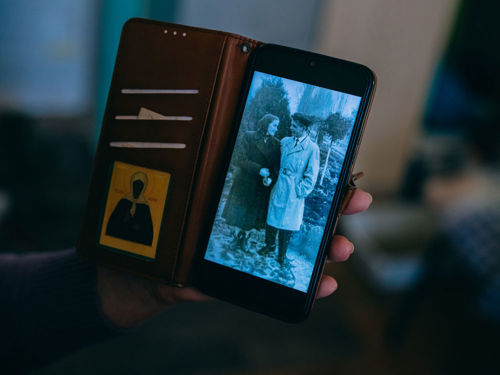
Liubov shows photos of her parents in their youth—her sister was able to save and digitise it. ©Julia Kochetova
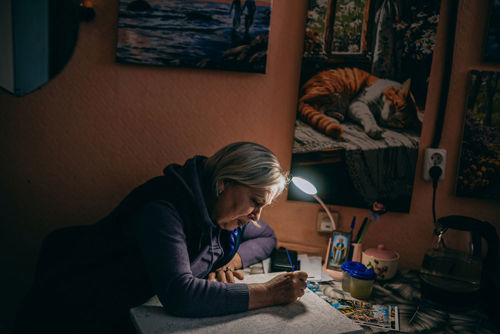
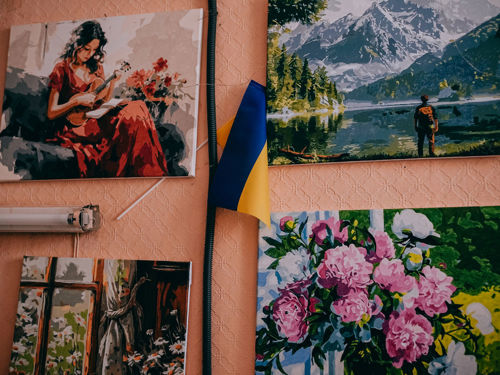
Liubov finds comfort in painting by numbers. She has completed more than 70 pieces, now hanging on her walls and those of her neighbours. “When you add the final strokes and the picture comes together — I really love that feeling,” she says. ©Julia Kochetova

For many people living near the front line, the decision to leave home is extremely difficult and often takes a long time, despite the severe danger posed by the advancing front line. With limited financial means and few alternatives, elderly people and those with chronic illnesses are even more likely to remain. Many stay in their homes until sustained bombardment, the destruction of infrastructure, and the collapse of essential services, including medical care, leave them with no choice but to flee.
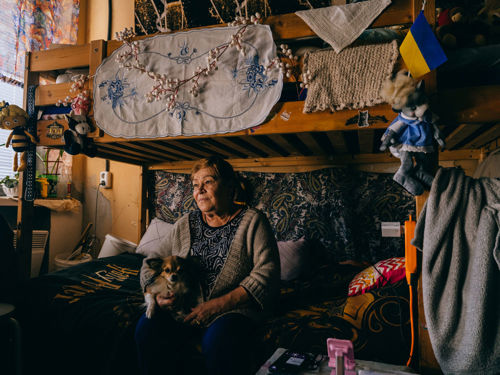
 

Lyman was also 67-year-old Zinaida Babisheva’s home, who now lives in the Dnipro displacement shelter. “I still dream of my home… apples, cherries, roses, lilies. We had everything. Now my daughter grows flowers in pots, but I no longer want to plant anything.” ©Julia Kochetova
Zinaida's neighbour, with whom she kept in touch, said that during the occupation, Russian soldiers who entered Lyman robbed her house. He saw them carrying things out of it. But Zinaida managed to save several photo albums which she took with her. ©Julia Kochetova
Liubov Kuzmenko, 65, from Siverskodonetsk says her apartment was looted after Russian forces took control. But what weighs most heavily on her is separation from her family. “My father passed away in 2024, and I could not even bury him. Now, only my sister can visit our mother, while I can only record videos to send my greetings. It pains me deeply that I cannot be by my mother’s side.”— Liubov ©Julia Kochetova
Liubov shows photos of her parents in their youth—her sister was able to save and digitise it. ©Julia Kochetova
Liubov finds comfort in painting by numbers. She has completed more than 70 pieces, now hanging on her walls and those of her neighbours. “When you add the final strokes and the picture comes together — I really love that feeling,” she says. ©Julia Kochetova
How MSF is supporting health care in Ukraine amid war

As the war grinds on, hospitals, pharmacies, schools and shops have been destroyed or forced to close. Entire communities have become uninhabitable. As fighting continues, displacement has risen — and humanitarian needs are becoming more complex and prolonged. MSF continues to provide medical and psychological care across Ukraine: supporting hospitals near the frontline, running ambulances for war wounded patients, and operating mobile clinics in shelters and in communities hosting displaced people, as well as in areas where people are trying to remain despite collapsing services and an advancing front line.
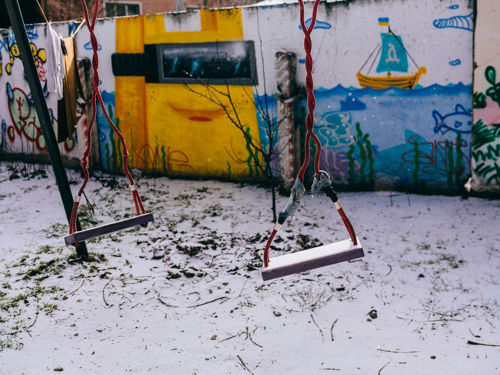
“We had many families come here with small children," says Anastasiia Kravchenko, the shelter administrator, who also lives there. "We used to carry them in our arms, and now look – they are already grown up and running around on their own. Time flies so quickly,”

Latest News & Stories