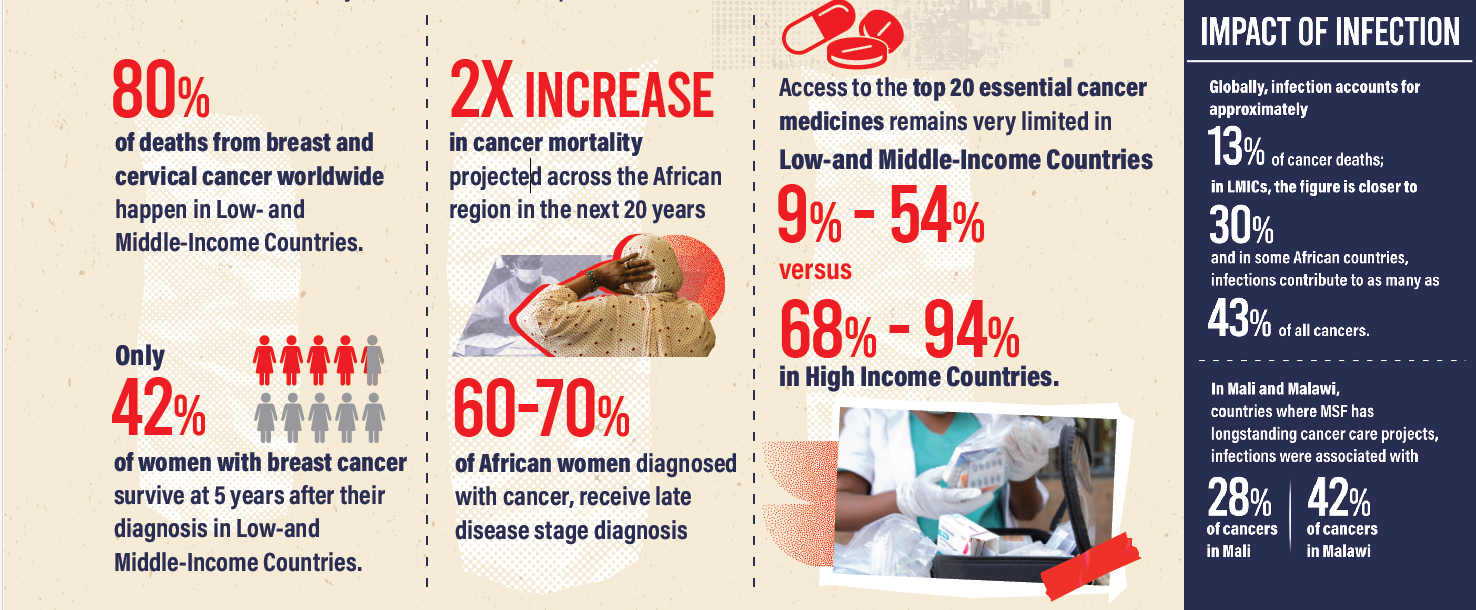

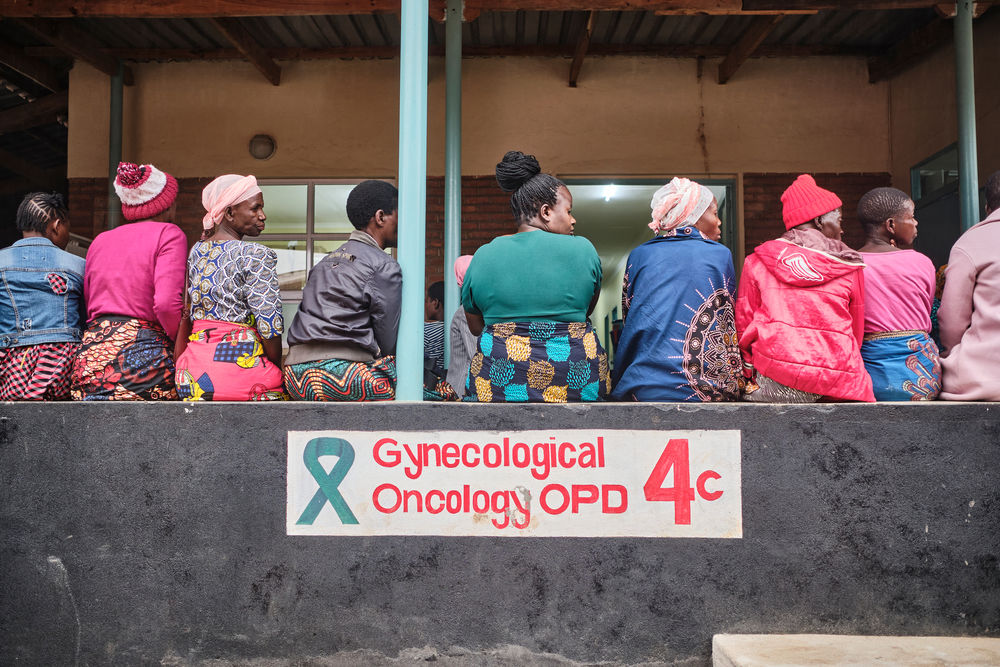
Through decades of work in the fight against AIDS, Medecins Sans Frontieres/Doctors Without Borders (MSF) has developed knowledge on treating HIV-related cancers, such as Kaposi’s sarcoma as well as breast and cervical cancer — cancers that remain among the leading causes of death for women in many of the contexts where we work.
Cancer increasingly affects people living in fragile, humanitarian and low resource settings. Yet, delivering cancer care is still often considered too complex, specialised or resource-intensive in these contexts. Women in particular, face late diagnosis, disrupted services, poverty, stigma, long and cost travel and very limited treatment options – abandoned to their fate.
The barriers they confront in completing care range from limited diagnostics, medicines access, radiotherapy, programme financing, procurement and healthcare workforce capacity.
These are the constraints MSF teams grapple with during field implementation of context adapted models of care, while offering patient-centred and multidisciplinary approaches supported by fit-for-purpose research and innovation.
Our operational experience challenges assumptions on the feasibility of cancer care in constrained settings – particularly on breast and cervical cancer. Over the last decade, we have run different cancer care support projects in Malawi, Mali, Papua New Guinea, Kyrgyzstan, Eswatini and Zimbabwe.